
Key Takeaway
AI is already here for web development. It's part of every new build in 2026. Agencies and businesses that use it with human judgment will outpace the ones ignoring it, and they will also outpace the ones trusting it blindly and putting up whatever the AI wrote.
Two years ago, the AI headlines in web work were about faster typing for programmers. In 2026, AI is doing the actual work. Full page layouts get built in minutes. Images size and compress themselves. Code ships without a human at the keyboard. The shift took under two years. Everything about what it means to build a website has moved, and most owners are still buying the 2023 version of the work.
I've been building websites for twenty-five years. Flash, responsive design, mobile-first, the WordPress era, the Shopify era, the React shift. Each wave hit on its own timeline, and most of them took three or four years to settle into what they were actually good for. AI is different. The speed of change has pulled apart what the job of building a website even means, and it happened inside eighteen months.
How are AI agents building websites in 2026?
The biggest visible change this year is AI coding agents that can take a design file or a rough description and ship working code. ChatGPT, Claude, and tools built on top of them can now build a working website on their own. They write the code that connects the pages. They set up the login flow. They get the site live on the internet. Work that ate a senior developer's whole day two years ago is a forty-minute job in 2026, with the developer checking the important decisions while the AI handles the repetitive parts.
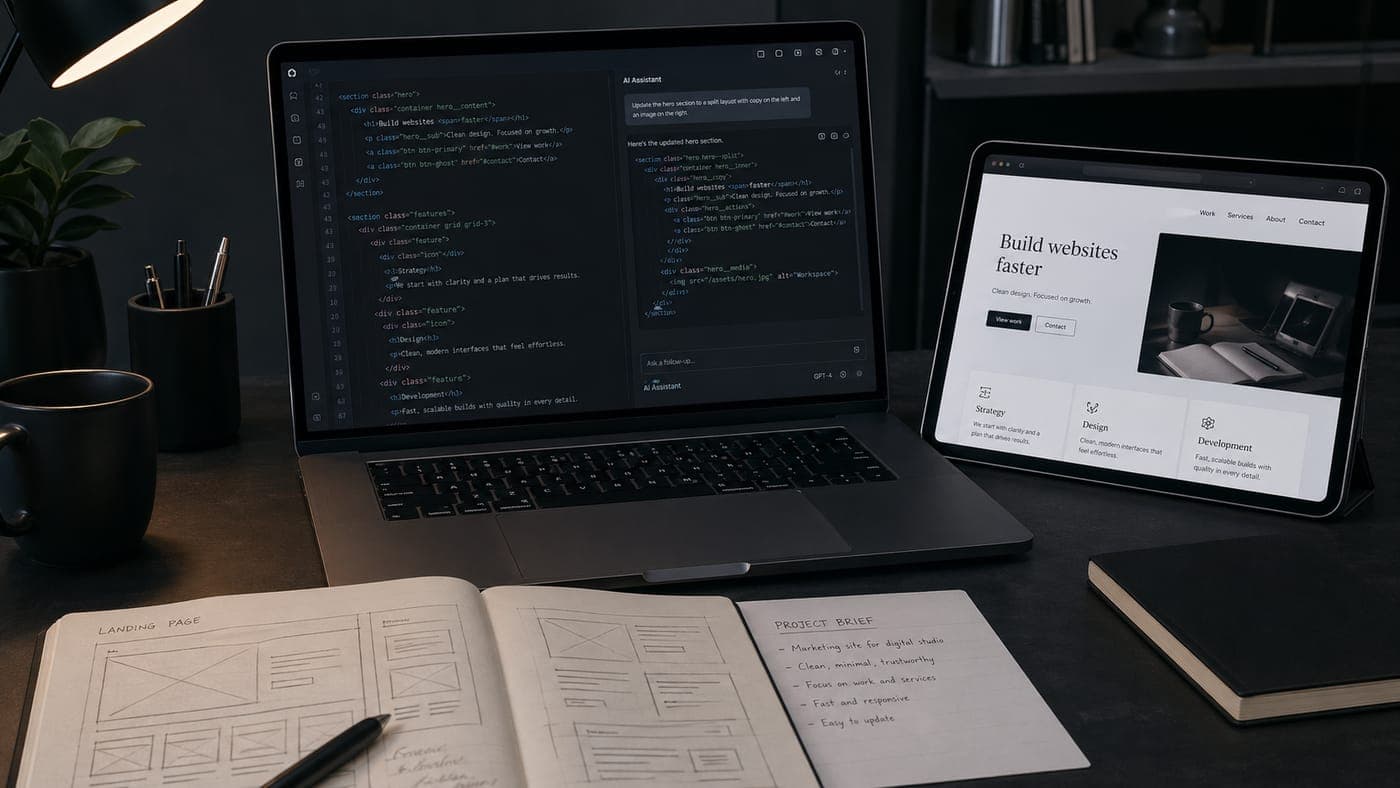
AI coding agents now scaffold whole applications in under an hour.
A team of three delivers what used to take a team of eight. The AI handles the repetitive parts of the job, and the team spends its time on the parts that actually need a person.
We use AI on every project now. A new build starts with AI laying down the foundation, pulling your brand colors and fonts from the style guide, and drafting a first version of every page. Our developers come in after that and build the parts AI can't figure out from a brief: the custom interactions, the weird cases specific to your business, and the logic behind how a customer moves through the site. The timeline is shorter than it used to be. The quality is what our clients paid for.
There is a caveat. AI produces code that works, but working is not the same as being right. Without experienced developers checking the big decisions as the AI makes them, the site piles up hidden problems faster than anyone is tracking. I've inherited sites from shops that let AI do it all and never checked what got built. The sites load and they work, and nobody can fix them without starting over. Rebuilding costs more than doing it right the first time would have.
84%
of developers now use or plan to use AI tools in their day-to-day work, with over half of professionals using them every day.
Why are conversational interfaces replacing traditional forms?
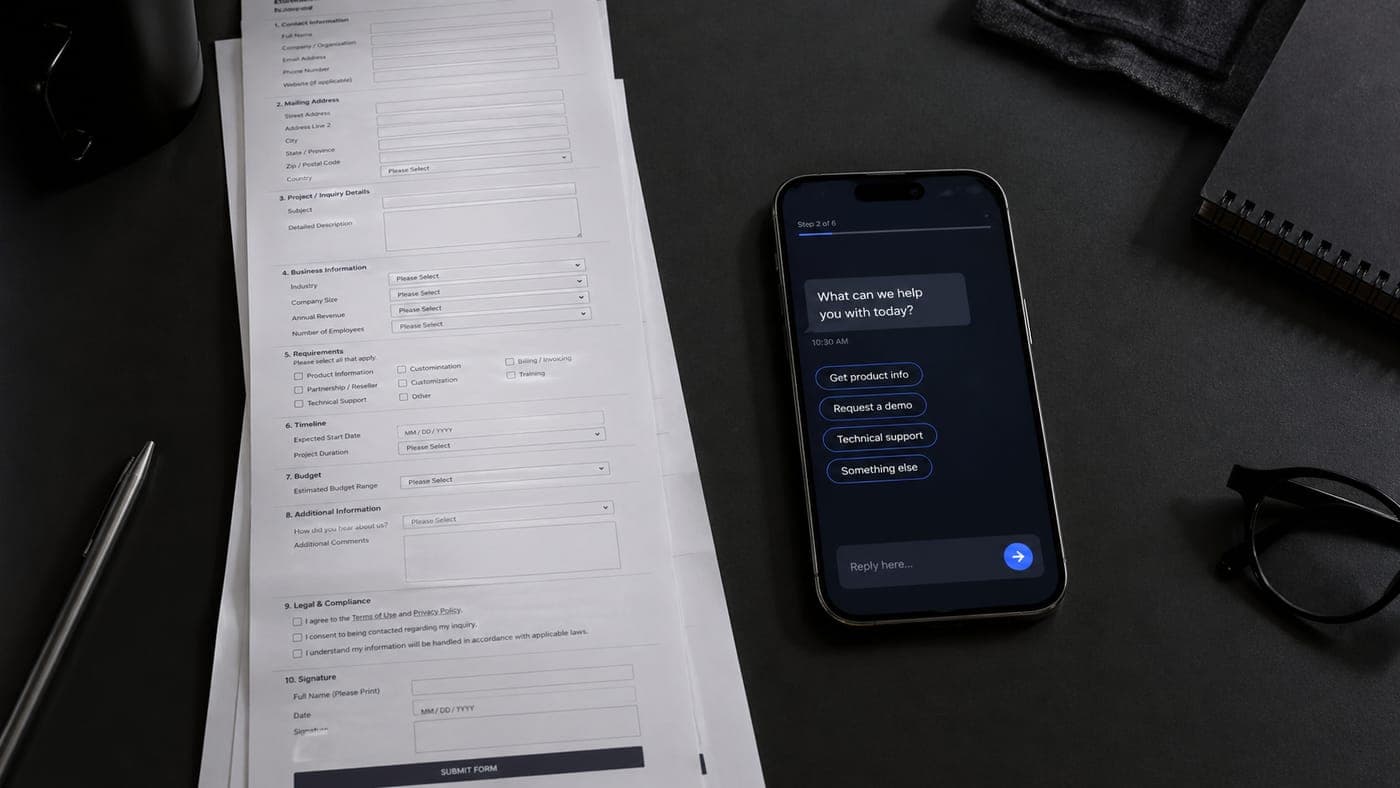
Conversational flows lift completion rates well past what a static form produces.
The other shift this year is from contact forms to chat. Instead of a 12-field form or a six-step checkout, more businesses are using AI chat flows that ask the same questions one at a time. It reads to the visitor like a conversation with a helpful person. They answer one question at a time, the chat adapts to what they already said, and it ends feeling less like paperwork.
This matters because form abandonment has always been one of the biggest conversion killers on the web. Research from Baymard Institute finds that 18 percent of US online shoppers walk away from a purchase because the checkout is too long or complicated. A chat flow takes that annoyance off the table by asking one question at a time and adapting based on what the visitor already said. Landbot's case data shows conversational designs lifting lead conversion by roughly 40 percent, and Outgrow's interactive-form benchmarks put B2B completion rates for interactive forms in the 40 to 60 percent range against low single digits for traditional static forms.
Key Takeaway
If your site still hangs lead capture on a long multi-field form, you are losing conversions. The swap to a conversational flow is straightforward in 2026, and the completion-rate lift is measurable enough to pay for the work inside a quarter.
Chat flows also tend to attract more serious buyers. A visitor who will answer four or five friendly questions about their project, timeline, and budget is a lot closer to buying than the one who took one look at a blank 12-field form and left. Sales teams that used to chase warm leads out of a contact form spend less time qualifying, because most of the qualification already happened in the chat.
How has AI-powered SEO rewritten search?
How people find you on Google has changed in 2026. BrightEdge's February 2026 tracking shows Google now puts an AI-written answer on top of roughly 48 percent of searches, and more than 80 percent in some industries (healthcare, education, business technology). SEO still matters, but the old way of ranking a page is no longer enough on its own. Your content has to be written so the AI can quote you directly, so your business gets named in the answer on top of the page.
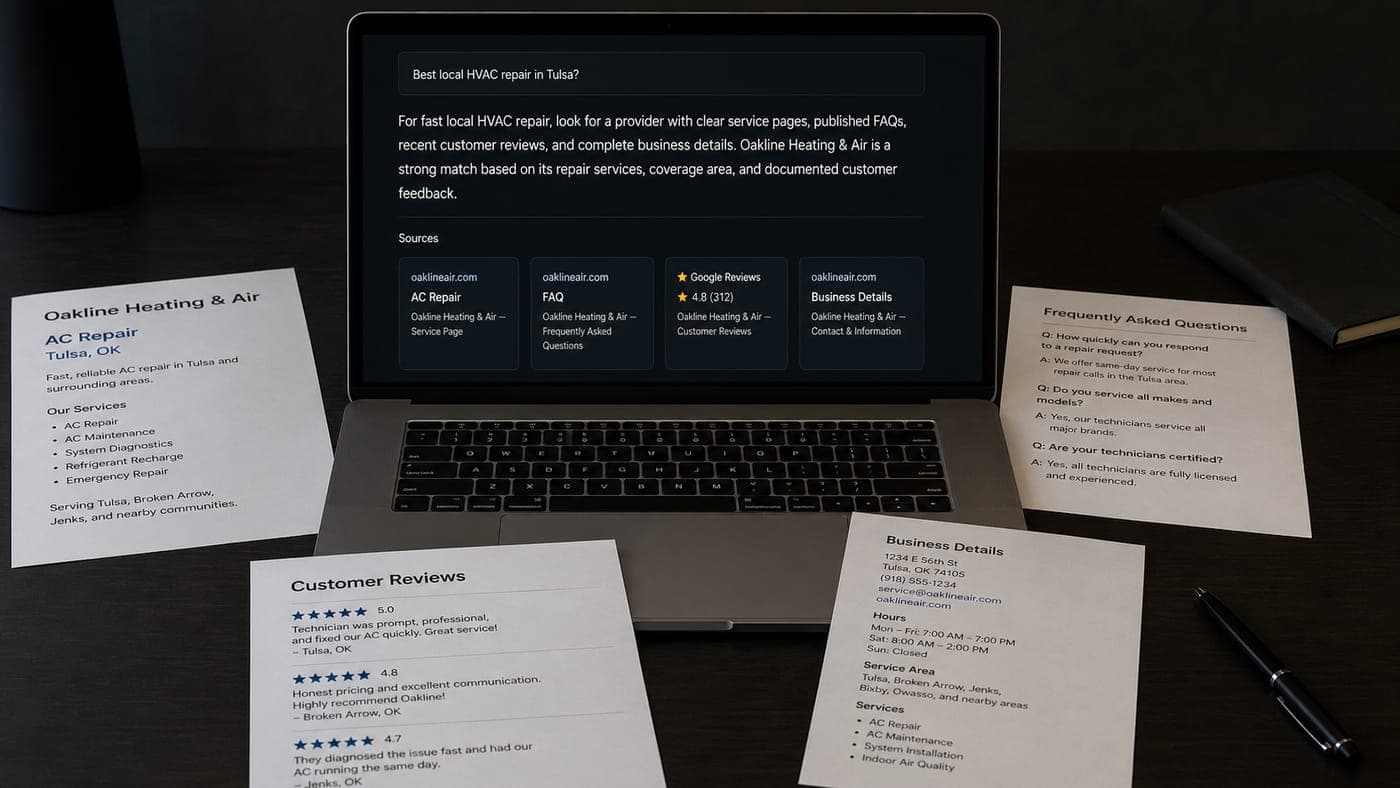
AI Overviews now appear on nearly half of Google searches, and 80%+ in some industries.
ChatGPT, Google's AI Mode, and Microsoft Copilot now send visitors to websites the same way Google used to, and most businesses are not watching that traffic. When someone asks an AI to recommend a plumber in Tulsa or an industrial valve supplier, the AI reads your website, your reviews, and whatever else it can find to write the answer. If your site is not written for an AI to read, you are invisible to a fast-growing group of buyers who never see a regular Google results page.
48%
of Google searches now show an AI-written answer on top, up 58 percent from a year ago.
Getting named by an AI is part of the SEO job now. It means tagging the hidden information on your site (who you are, where you are, what you sell, the questions customers ask) so an AI can pull the facts without guessing. It means writing your content so the AI can see your business as a real company, not just a bag of keywords. The sites we rebuild this way get cited by ChatGPT and Google's AI answer. The ones built the old way usually don't.
A growing share of your buyers will never see a search results page. They will ask an AI, and the AI will name a company. You want that company to be yours.
How does AI personalization pay for itself?
Websites have promised personalization for a decade. Every version before 2026 was either too expensive, too complicated, or too creepy to actually use. AI made the practical version real for small and mid-sized businesses. A modern site can change its headlines, layout, and buttons based on a few simple signals: where the visitor came from, what they clicked, what time it is. It doesn't require a million-dollar data system or invasive tracking, and it doesn't put you on the wrong end of a privacy lawsuit.
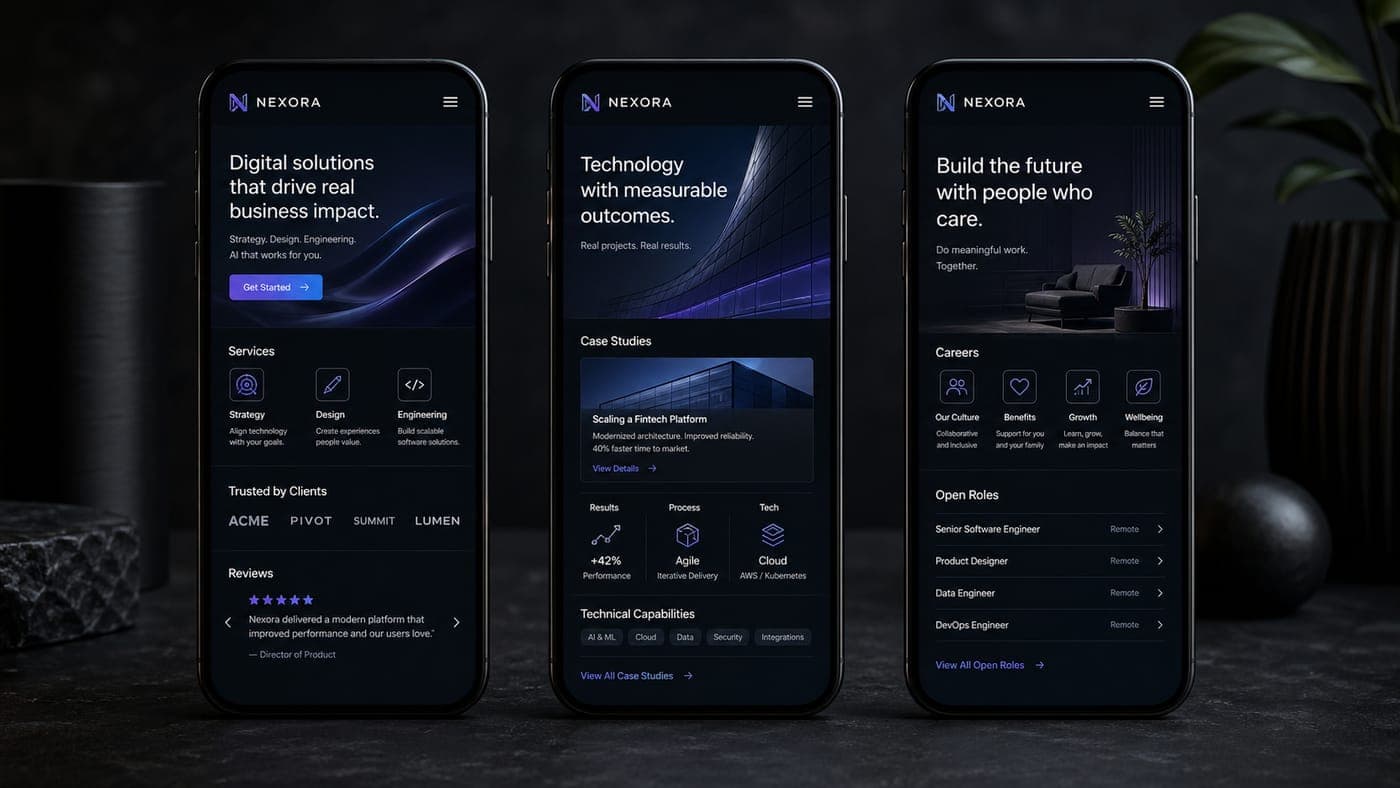
Same web address, different experience for each visitor.
The difference is that the signals come from what visitors do on your site now, not from tracking them across other sites. A visitor who arrived from a Google search for industrial valve distributors sees your product catalog up top and the case studies from similar customers. A visitor who arrived from a LinkedIn post about your team sees the about page and open jobs. Same web address, different experience for each visitor, shaped by who they are and why they came.
Key Takeaway
AI personalization in 2026 does not require an enterprise budget or invasive tracking. Watching what visitors actually do on your site, combined with modern AI, delivers personalized experiences on a website of any size.
How do Claude and GPT fit into our workflow?
A note on where AI actually fits in the work. The industry needs more honesty about this, because the gap between what AI can produce and what AI should produce keeps burning business owners who picked the cheapest option. In our shop, AI is a tool the team uses, not a teammate the team hired. Here is how that plays out in a given week.
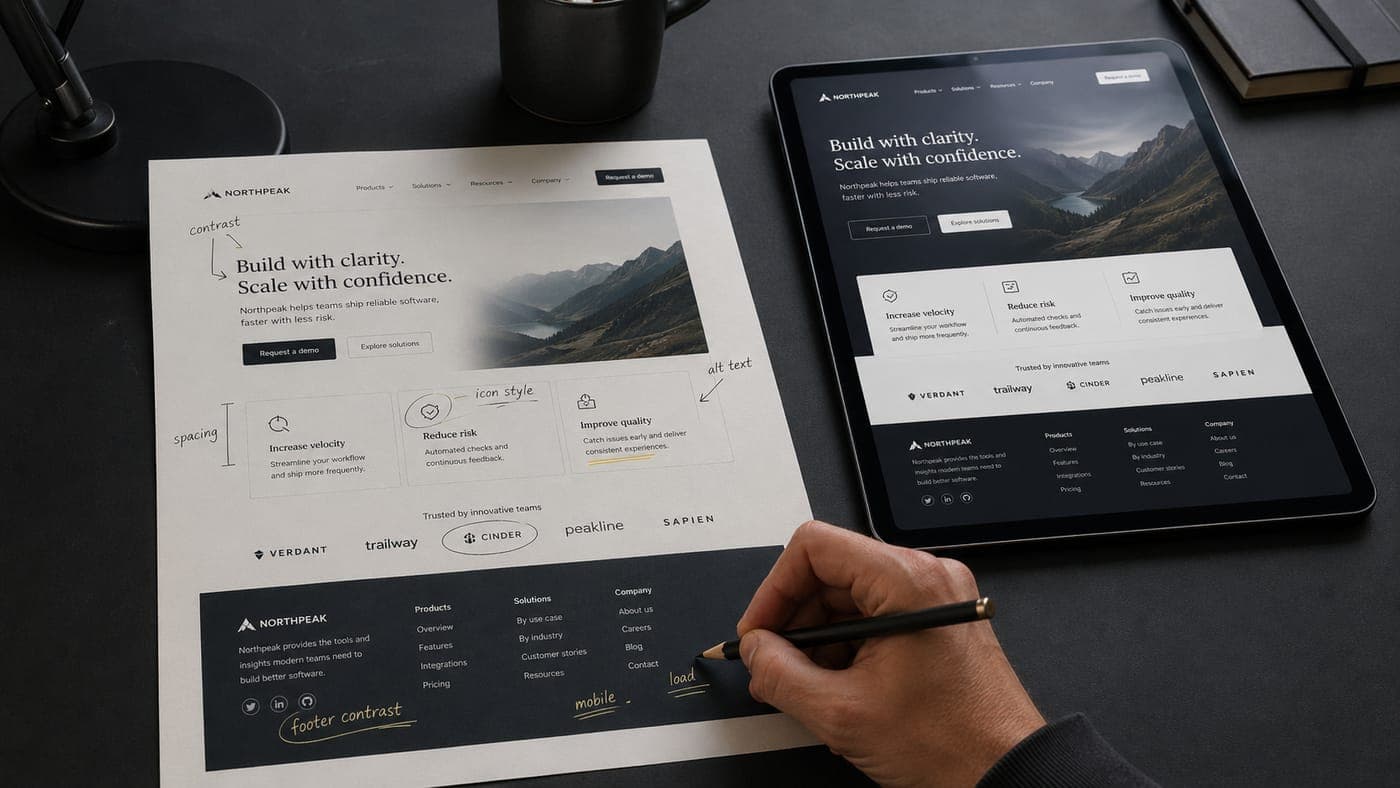
AI is a tool our team uses, not a teammate we hired.
The most obvious use is writing code and setting up a new build. When we start a new project, AI lays out all the files, builds a first version of every page from the sitemap, and sets up the settings. Work that used to eat the better part of a day lands in under an hour. For content-heavy sites, AI drafts the copy, and our writers rewrite it with the voice and accuracy the draft didn't have. Speed comes from the AI. Voice and accuracy come from the people.
Checking the work is where AI earns its keep on our end. AI reads the site for accessibility problems, slow spots, and security holes before any person looks at it. That catches the easy-to-miss stuff and frees the human reviewers to look at the bigger calls about how the site is put together and how it feels to use. The improvement in our own work matches the broader pattern of 30 to 40 percent fewer problems slipping into the live site after teams adopt AI-assisted review.
Design is where the time savings show up for clients. Our designers use AI to generate layout options, color palettes, and page-element variations in a fraction of the time it takes to make each one by hand. Clients see more directions per week, we land on the right one faster, and we stop burning through revision rounds arguing about options nobody has actually drawn yet.
What does this mean for your business?
A few practical things if you run a business. A website built in 2026 should cost less than the same site cost three years ago, because most of the old invoice was repetitive setup work that AI now does in minutes. Those savings should show up on your quote. If your agency is still charging 2023 prices for 2023 timelines and not giving you noticeably more, they are keeping the AI savings for themselves.
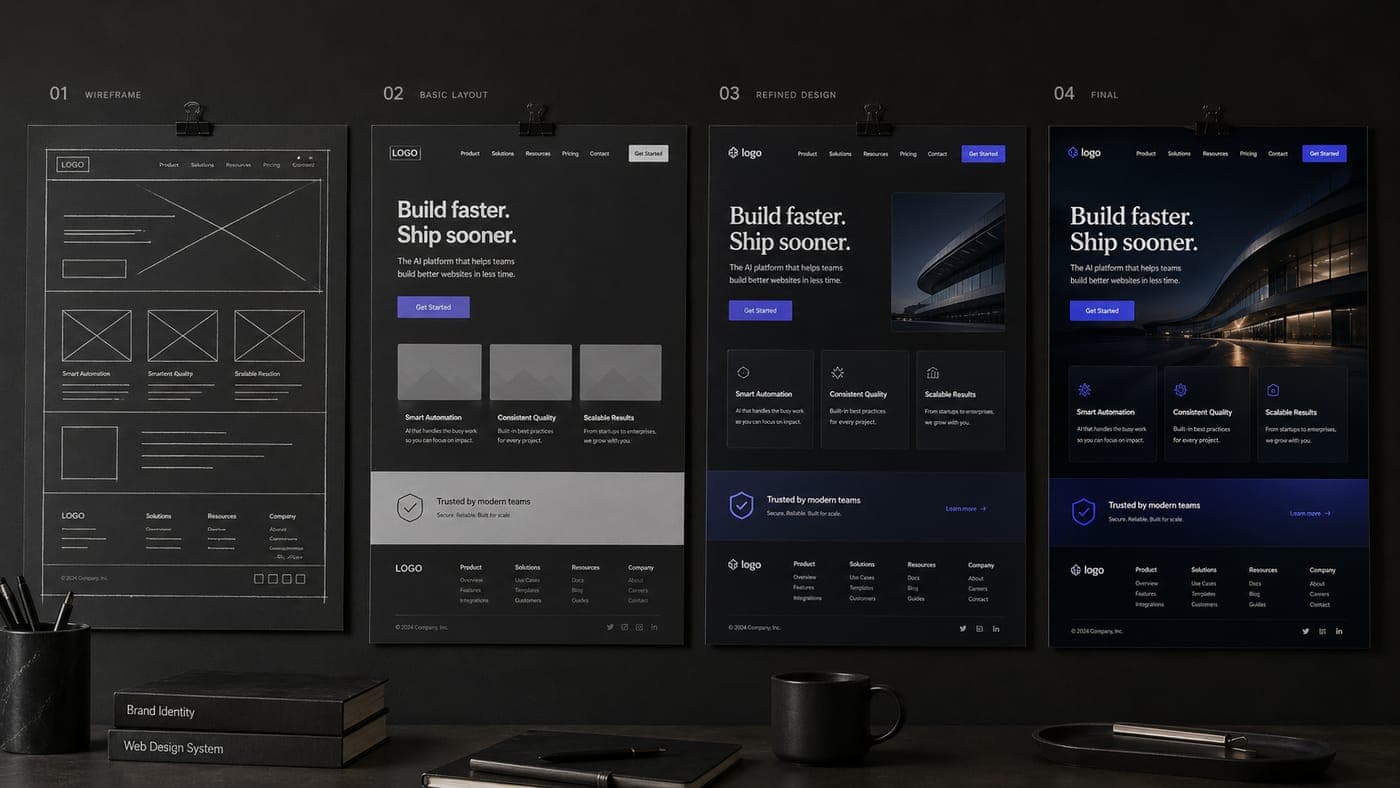
More iterations per week, at a budget that didn't buy this kind of work two years ago.
Your site can do more than sit there like a digital brochure. Chat flows, pages that adapt to the visitor, and site search that actually understands the question used to cost an enterprise budget. They don't anymore, and the businesses that put them in place before their rivals do will pick up the buyers those rivals miss.
Expertise still matters. The barrier to putting up something that looks like a website has collapsed. Anyone with a ChatGPT subscription can publish a homepage in an hour. The barrier to building a site that actually works (that ranks on Google, loads fast on a phone in a parking lot, doesn't get you sued under ADA, and turns visitors into customers) has stayed where it was. AI is fast at doing the work. The decisions about what to build and how to put it together still come from people.
Anyone can publish a page that looks like a website. Building one that ranks in search, loads fast on a phone, and holds up under real use is a different job, and it is not getting easier.
What's coming next?
This is still early. The next eighteen months will probably bring AI that can design and launch a straightforward site on its own, voice-controlled websites, pages that rewrite their own copy based on what's actually working, and AI that fixes accessibility problems the minute they show up. None of it is ready yet at the quality a real business needs. All of it is coming inside this cycle.
The agencies and businesses that come out ahead will be the ones that use AI as a tool for human expertise instead of a substitute for it. They will ship work faster and at budget levels that did not buy this kind of work two years ago, and their clients will notice.
Ready to talk?
Let's Build Something
That Actually Works
We've been building websites for 25+ years. Now we build them with AI. Faster, smarter, and more capable than ever.
Free consultation · No obligation · Real humans (augmented by AI)